
Aurora Santika (b. 1996, Bogor, Indonesia) found early refuge in books, films, and musical dramas. These formative encounters with storytelling nurtured a lasting relationship with fiction, which later became central to her artistic practice.
She began her formal training in 2013 at the Fine Arts Department of the Indonesian Institute of the Arts, Yogyakarta, where she developed a strong interest in Impressionist approaches to color and light. Aurora earned her Bachelor of Arts degree in 2018.
Since then she has participated in numerous group exhibitions and held two solo exhibitions: Breaking Through (2018), curated by Suwarno Wisetrotomo, and Dreamscape Anthology (2023), presented by STEM Projects of Srisasanti Syndicate. In 2024, she joined the Vermont Studio Center residency, supported by the Jon Imber Painting Fellowship.
Aurora Santika’s visual language is shaped by a wide range of visual, audiovisual, and literary influences. She is drawn to works that are fantastical and dreamlike, yet grounded in narrative clarity. Early inspirations include the animated films of Studio Ghibli, admired for their subtle storytelling and emotional depth.
Her influences also extend to the symbolic imagery of the Pre-Raphaelite Brotherhood and the timeless charm of vintage illustrations. These references inform her approach to world-building, where fiction serves both as subject and method.
Her technique emphasizes light, nuanced color divisions, and strong contrasts to create a heightened sense of drama—drawing from Impressionist color theory, Romantic-era lighting, and the dynamic use of light and shadow found in Japanese manga and animation.
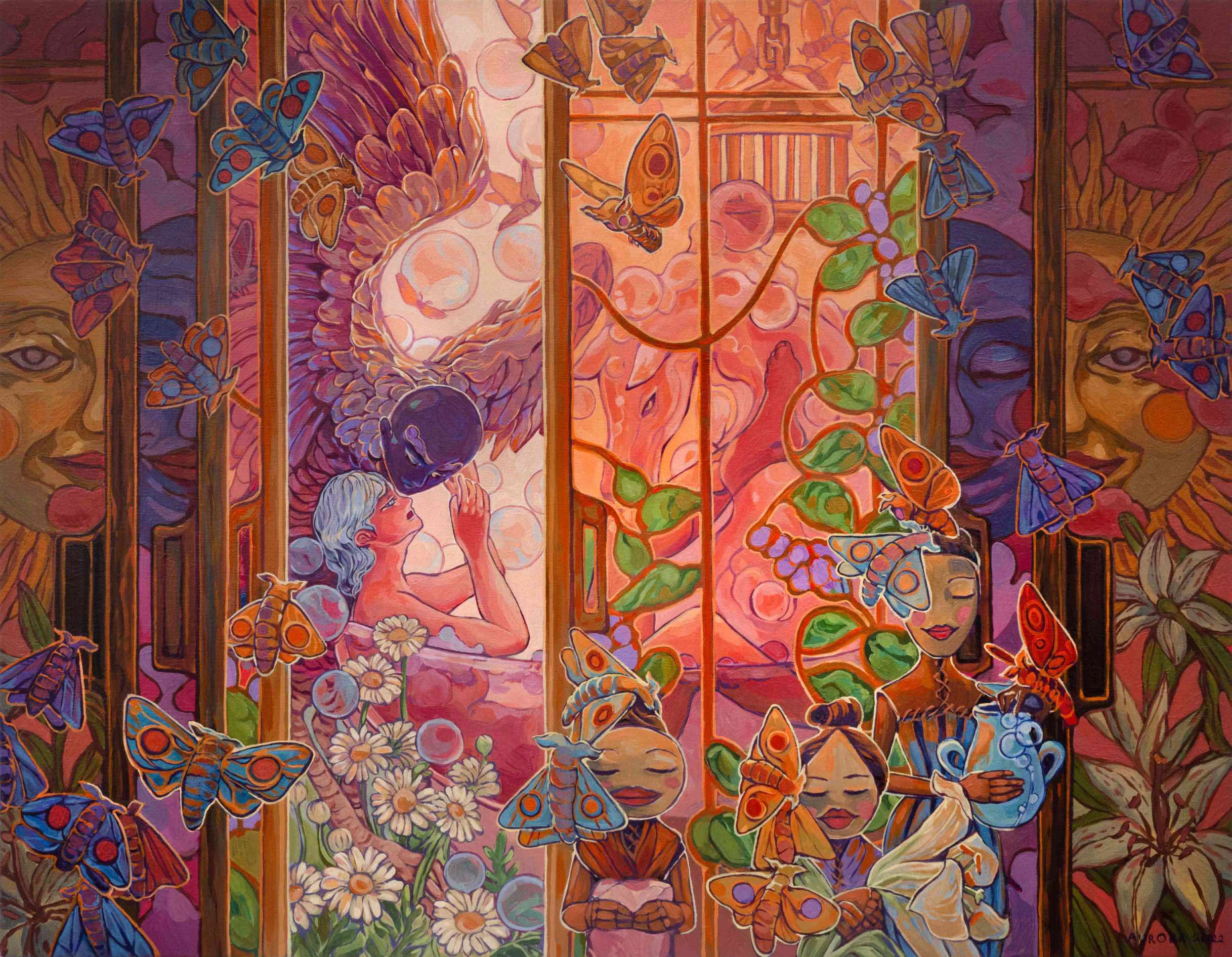
A defining quality of Aurora Santika’s work is the feeling of looking into another world. Her compositions place the viewer as a quiet witness to unfolding scenes within fantastical spaces that echo lived reality. Over time, her layered narratives and dense compositions have evolved into a visual language reminiscent of stained glass—shaped by deliberate color segmentation, heightened contrast, and precise outlines.
Drawing from personal experiences as well as the stories of others, Aurora views her practice as an ongoing effort to understand life. Through fiction and metaphor, her work offers a deeply personal way of addressing complex emotional, psychological, and social realities.
