An Epic in Four Parts (Part III)
- Media : Acrylic on canvas
- Dimension : 90 x 120 cm
- Year : 2023
-
Description :
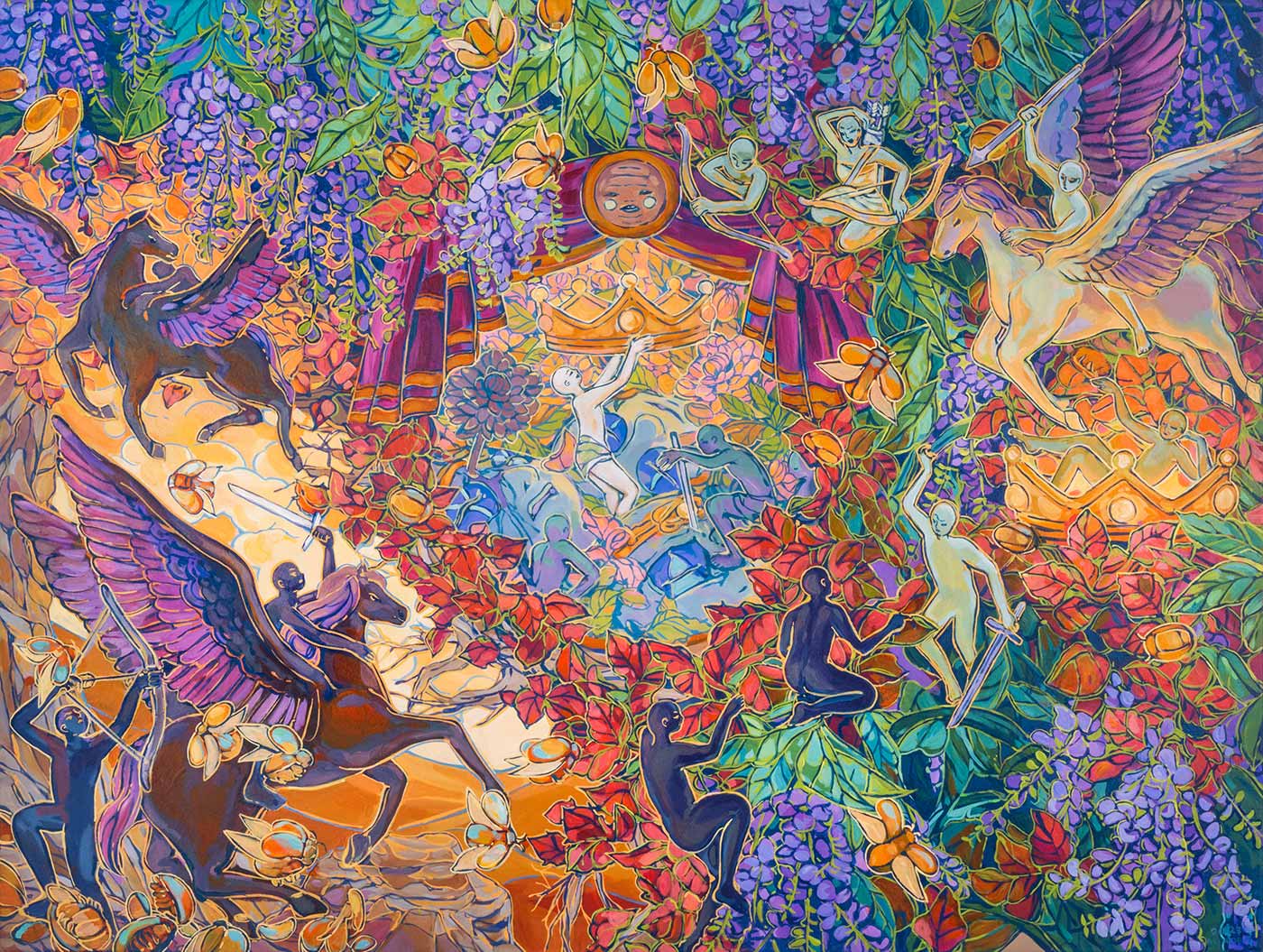
Part III shows both the evolution of the dynamic in part II, as well as a brief note on the end of the giants. The people, upon learning they no longer had to bow to the masters, did not stop with just the two giants. A scene in the middle of the composition, framed by blood red ivy and stage curtains, shows the ironic aftermath of part II : once a strategic attempt to wield out its rivals, the weapons forged had since been turned against the ‘savior’ who after all had simply been another master under different pretext. It was beheaded in the same way as the rest of the giants, their heads piled up amidst fallen dahlia and becoming the ground on which a new king—chosen among the people, by the people—was coronated. Everything seemed hopeful, and yet the main scene shows a yet again segregated people fighting one another. What happened ?
The clue lies in the disparaged landscapes in which these people inhabits. One barren desert and the other lush with Wisteria and evergreen leaves, it mirrors the way the realm was divided in part I but taken to the extreme. The promise of a shared paradise it seems was not honored by the ruling party. The once-serf, drunk with newfound power, is acting out in reverse the same dynamic left by centuries-old wound. It favors its own kind as it drains the land and blood of its siblings, the same way the old masters did. Eventually, the repressed people had no choice left but to fight. This time against the ones who were born from the same root as them.
While the middle scene is a nod to Indonesian War of Independence, the main scene took inspiration from the subsequent internal strife from the republic’s early days in which the underlying dynamic still continues even today. Whether it be civil discourses and genocide stemming from differing ideological visions, or certain systemic inequalities—inherited from the old days—that prioritize the "Center" over the "Periphery," part III shows the cyclical nature of oppression. How tragic it is to have slain the heads of the conquerors only to be subjugated by one’s own people who, after no longer bound by a shared hunger, now begin seeing their own blood as the new ‘other’.